ISRO Successfully Launches India’s Communication Satellite GSAT-30
India’s telecommunication satellite GSAT-30 was successfully launched into a Geosynchronous Transfer Orbit (GTO) from Kourou launch base, French Guiana by Ariane-5 VA-251. “GSAT 30 will provide continuity of direct-to-home TV services from this slot, as well as digital satellite news gathering and very small aperture terminal services,” said ISRO chairman K. Sivan prior to the launch.
GSAT-30 is to serve as replacement to INSAT-4A, launched on December 22, 2005 spacecraft services with enhanced coverage. The satellite provides Indian mainland and islands coverage in Ku-band and extended coverage in C-band covering Gulf countries, a large number of Asian countries and Australia. The designed in-orbit operational life of GSAT-30 is more than 15 years.
The 3,357-kg satellite, which was deployed from the lower passenger position of Ariane-5 launch vehicle (VA 251) into to geostationary transfer orbit (GTO), is configured on ISRO’s enhanced I-3K Bus structure to provide communication services from Geostationary orbit in C and Ku bands.
Since the launch of India’s Ariane Passenger Payload Experiment (APPLE) satellite on Ariane Flight L03 in 1981, Arianespace has orbited 24 satellites, including GSAT-30, for the Indian space agency.
Chandrayaan-2 orbiter locates lander Vikram on Moon
ISRO, with the help of the Chandrayaan 2 orbiter, has found out the exact location of the lander Vikram, that had lost contact with the space agency. Vikram,
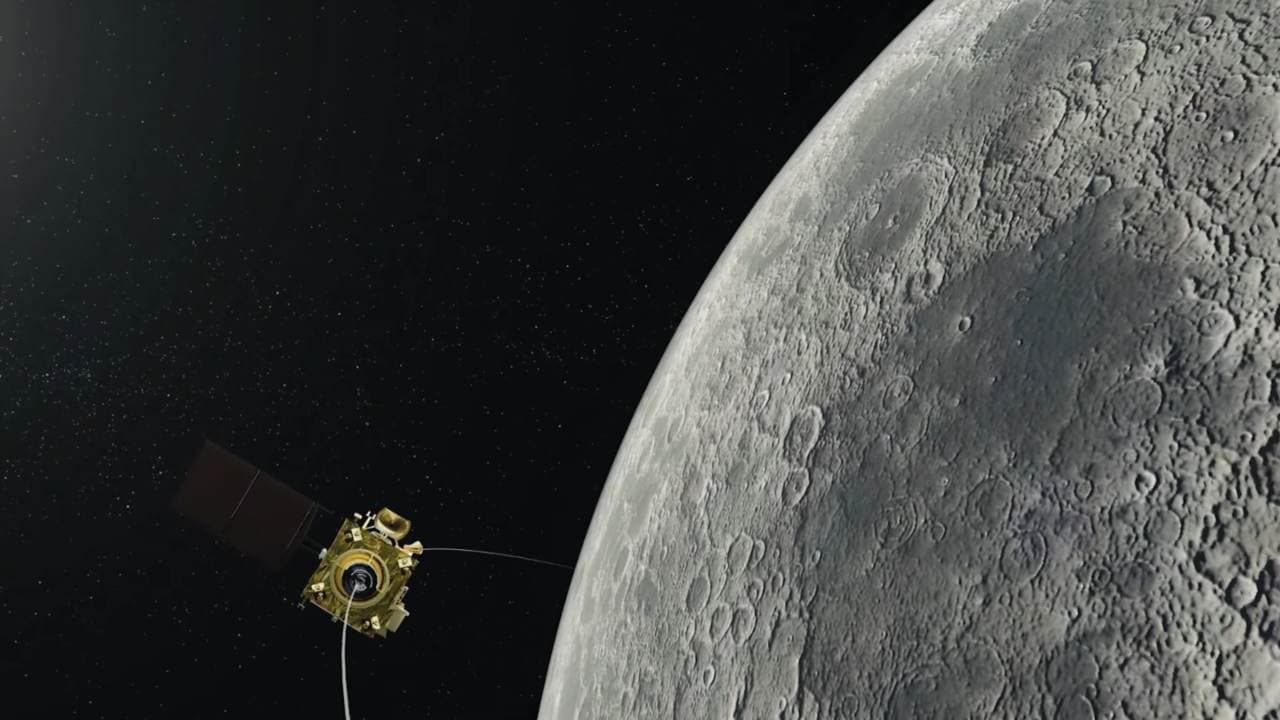
the lander, was lost when it was attempting a “soft” or controlled landing near the south pole of the Moon where scientists believe there could be water ice. Communication was lost just as it was about to touch down.
ISRO Shares Photos Of The Earth Captured By Chandrayaan-2
The Indian Space Research Organization (Isro) released the first few images of Earth captured by Chandrayaan-2 as it orbits the planet. In the images captured on Saturday at around 5.30 pm, the Earth appears as a beautiful blue marble with white swirls of clouds and some shades of green and brown indicating land.

The images were taken from a distance of approximately 5,000 km and by the LI4 camera aboard the lander. The historic “soft landing” would be attempted on 7 September, which if successful, would bring India into the elite club of countries, including Russia, the US and China, which have successfully landed on the lunar surface.
Chandrayaan-2 Mission Launch Called off Today Due To Technical Snag
The Indian Space Research Organisation (ISRO) said in a statement, A technical snag was observed in launch vehicle system at 1 hour before the launch. As a measure of abundant precaution, Chandrayaan2 launch has been called off for today. Revised launch date will be announced later.

ISRO did not elaborate on the technical snag, but top sources within the space agency told that improper fuel pressure was among the reasons to call off the Chandrayaan-2 launch.
Elon Musk’s Brain-Machine Start-Up
Elon Musk’s Brain-Machine Start-Up Neuralink Plans Human Trials In 2020
Elon Musk announced that his new startup, Neuralink, hopes to begin implanting devices into human brains as early as next year. “We hope to have this aspirationally in a human patient before the end of next year,” he said at a press conference.

According to Musk, the Neuralink system would include a tiny chip that would allow humans to achieve a “symbiosis with artificial intelligence.” He explained that it would be able to treat disorders like Parkinson’s or Alzheimer’s and ultimately could “preserve and enhance” brain function.
 Teckgrasp